
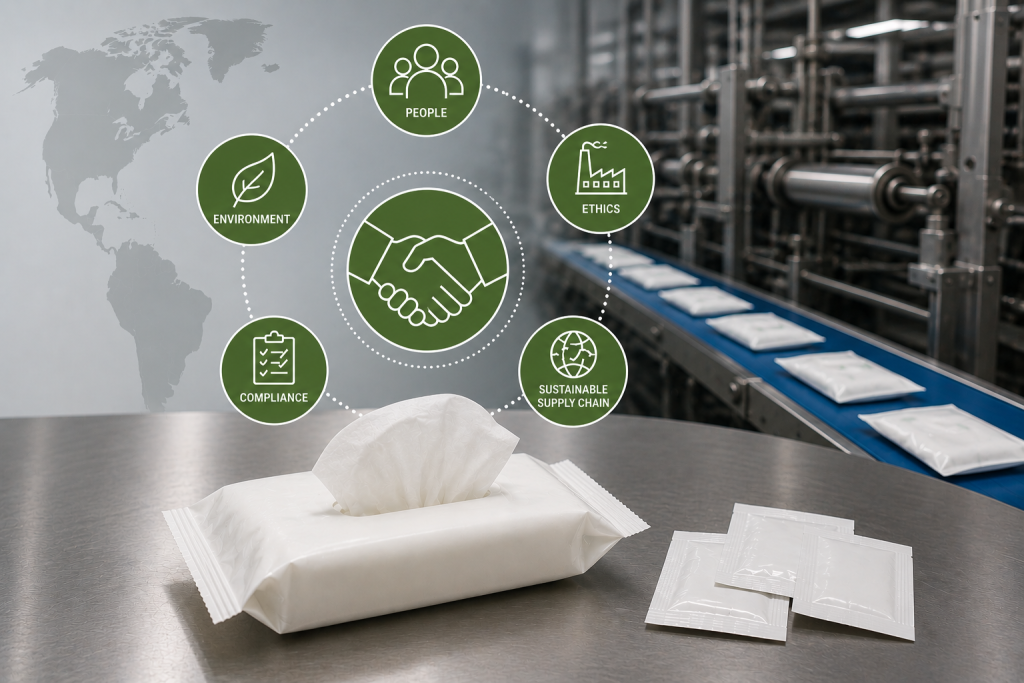
In the current manufacturing landscape, ethical trading is a fundamental requirement. For procurement teams, selecting a manufacturing partner is about far more than cost, capacity, and lead times. Increasingly, it comes down to trust, transparency, and proven responsibility.
As scrutiny around supply chains intensifies, ethical trading has become a key factor in how manufacturers are evaluated, and ultimately, selected.
The Shift Towards Ethical Trading
Over the past decade, ethical trading has evolved from a niche concern into a mainstream procurement priority. ESG reporting requirements, regulatory pressures, and reputational risk have all contributed to higher expectations across the supply chain.
While procurement teams drive supplier selection, the responsibility for meeting ethical standards sits firmly with manufacturers. This shift has redefined what it means to be a competitive supplier.
Manufacturers are now expected to demonstrate:
- Responsible sourcing of materials
- Fair and compliant labour practices
- Measurable environmental management systems
- Clear, auditable policies and processes
At Guardpack, ethical trading is embedded into manufacturing operations. As leading manufacturers in the wet wipe and liquid filled sachet industry, we know just how important high levels of accountability are and ensure that customers can rely on consistent standards across production, supply chain management, and environmental performance.
A Manufacturing Standard
The rise of ethical trading reflects a wider shift in how manufacturing partners are assessed. Procurement teams are no longer satisfied with policy documents or self-declared commitments. Instead, they expect independently verified standards that demonstrate how a manufacturer operates in practice.
This is particularly important in global supply chains, where visibility can be limited and risks more complex. Ethical trading frameworks help bridge that gap by providing structured, comparable, and auditable benchmarks.
For manufacturers, adopting these frameworks is now essential to remaining competitive in a risk-conscious procurement environment.
Why Ethical Trading Matters More Than Ever
The importance of ethical trading in manufacturing is being driven by three key factors:
- Increased scrutiny across supply chains means businesses are being held accountable not only for their own operations, but also for those of their suppliers.
- ESG reporting requirements are placing greater emphasis on measurable sustainability and ethical performance.
- Reputational risk has become a commercial factor, with procurement teams under pressure to avoid manufacturers that could expose them to compliance or brand damage.
Together, these pressures mean that ethical trading is now directly linked to supplier viability. Manufacturers that cannot demonstrate responsible practices risk being excluded from procurement processes altogether.
The Role of Certifications in Manufacturing
To meet these expectations, manufacturers are turning to recognised certifications such as EcoVadis, SEDEX, and ISO 14001.
These certifications provide independent validation of a manufacturer’s approach to ethical trading.
- EcoVadis assesses sustainability performance across environmental, social, and ethical criteria
- SEDEX supports transparency in labour standards and supply chain practices
- ISO 14001 ensures robust environmental management systems are in place
For procurement teams, these certifications reduce the burden of due diligence and provide confidence that a manufacturer has been externally assessed against recognised standards.
For manufacturers, they help demonstrate that ethical trading is a core part of operational processes, not treated as a standalone initiative.
Guardpack are proud to have been awarded a Bronze rating by EcoVadis in our first assessment. We have also successfully passed our latest ISO 14001 surveillance audit with zero non-conformities, whilst also a member of SEDEX, further reinforcing our commitment to responsible and sustainable business practices.
Low-Risk, Responsible Manufacturing
From a procurement perspective, working with certified manufacturers significantly reduces risk. It signals that processes are in place to manage compliance, monitor performance, and address issues before they escalate.
For manufacturers, this builds resilience into operations. At Guardpack, this approach reflects our ethos. By maintaining internationally recognised standards and undergoing regular independent assessments, we’re able to provide customers with a high level of assurance around both product quality and ethical compliance. Transparency and trust have always been a key part of building long-term customer relationships.
Continuous Improvement
Importantly, ethical trading is not a one-time achievement and requires ongoing effort. Certifications like EcoVadis and ISO 14001 are designed to drive continuous improvement, encouraging manufacturers to regularly review and enhance their practices.
This ensures manufacturers are not only meeting current expectations but are also adapting to evolving regulatory and market demands.
In manufacturing environments, this continuous improvement cycle is particularly important, as processes, materials, and customer requirements continue to change over time.
Ethical Trading Embedded at Guardpack
As supply chain expectations continue to evolve, selecting a manufacturing partner now involves a broader set of criteria. Alongside technical capability and commercial viability, ethical trading has become a defining factor.
At Guardpack, we have taken the essential steps to ensure ethical practices are embedded into every stage of the manufacturing process, ensuring our customers can always source with confidence. If you’d like to know more about us and working alongside a trusted wet wipe and sachet manufacturer, our team would love to hear from you.
Get in touch with Guardpack today by simply filling out our contact form, emailing us at trade@guardpack.co.uk, or speak to one of the team today on 01245 505807.