
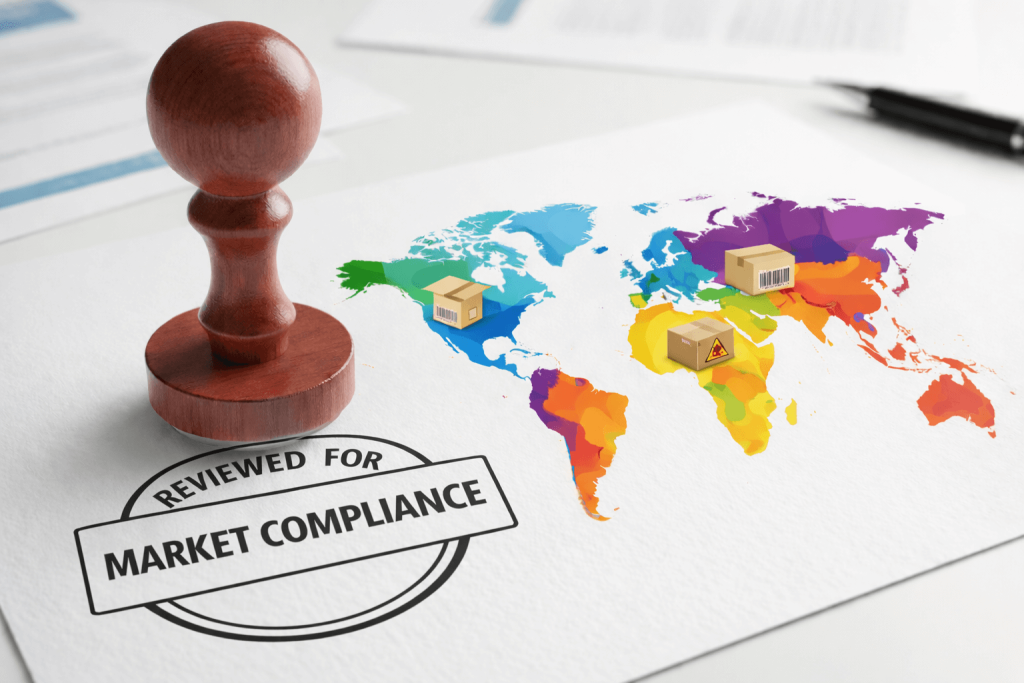
Labelling compliance should be an integral part of a brand’s regulatory strategy from the very beginning – during product conception, design, and development. Product claims, their wording, and the regulatory implications need to be considered early to avoid challenges later, whether selling domestically or abroad.
At Guardpack, we love helping our customers bring their ideas to life, through to finished products. As a UK-based private label wet wipe and sachet manufacturer, we’re proud to produce high-quality, custom-made products right here in the UK for a wide range of brands and sectors.
As your brand grows and begins entering new markets, it’s important to recognise that each region operates within a different political, economic and regulatory landscape. What works in the UK may not translate directly elsewhere – from labelling, symbols, languages and mandatory logos, to wider legal, environmental and cultural expectations. Taking a holistic, forward-looking approach helps you anticipate these differences early, reduce risk, and adapt your brand and operations with confidence as you scale.
We know this can feel complicated, so here’s some general guidance on what Guardpack can help with, where responsibility sits with the brand, and how we can work together to support labelling compliance across different markets.
Our Strength: UK Regulations
Because our primary customer base is in the UK, our regulatory checks and quality systems are primarily based on UK legislation. This means we can confidently ensure your product meets UK compliance standards.
For cosmetic products, the UK Cosmetics Regulation (the retained and amended version of Regulation (EC) No 1223/2009) remains closely aligned with EU Cosmetics Regulation requirements.
If your wipes or sachets are classed as cosmetics, for example, make-up removers, facial wipes or skincare sachets, and we supply the formulation, we can advise on:
- Ingredient listings (INCI format)
- Responsible Person (RP) details
- Safety assessments (CPSR)
- General labelling and claims guidance
Where clients supply their own liquid-filled cosmetic formulas, we will review the artwork supplied, but we cannot verify the accuracy or regulatory compliance of ingredient listings or claims. In these cases, responsibility remains with the brand or Responsible Person to ensure all information meets the relevant regulations.
Different Regulations for Different Uses
Some products we manufacture fall under other regulatory frameworks, including:
- CLP (Classification, Labelling and Packaging)
- Biocidal Products
- Detergents
- Medical Devices
Each category has its own requirements, and classification depends on the product’s intended use and formulation. This is why it’s essential to tell us at the start of a project where the product will be sold and how it will be marketed. Early clarity helps avoid delays and supports correct labelling compliance from the outset.
It’s therefore very important to tell us the product’s intended purpose and the countries you plan to export to at the start of a project. This allows us to advise appropriately and helps support with correct labelling compliance, product production and documentation in line with the correct regulatory framework.
Different Rules for Different Regions
When selling outside the UK, requirements can vary significantly. For example:
- Wet wipes containing plastic fibres sold in the EU must display the mandatory “Plastic in Product” (commonly known as the dead turtle) logo under the Single-Use Plastics Directive. In the UK, plastic will be banned from wet wipes from May 2027.
- Products sold in France must include the Triman logo, along with specific recycling and sorting instructions.
- Some countries have specific language and translation rules, meaning all consumer-facing text must appear in the official language of that market.
At Guardpack, we’ll print artwork exactly as supplied. However, because we can’t be fluent in every language, we’re unable to verify translations or foreign text for accuracy or compliance. We strongly recommend professional translation and local regulatory checks before artwork approval.
You can read more about the EU Single-Use Plastics requirements in our earlier post here.
How Guardpack Helps
We do our best to keep customers informed about major regulatory developments and offer guidance where possible. However, we don’t always know where products are ultimately sold, or what claims are made for this – it isn’t feasible for us to monitor every country’s legislation. That is why we also encourage customers to seek local regulatory advice when selling outside the UK (and the EU, where applicable).
While we subscribe to industry updates and work closely with trade bodies and partners, some changes only come to light through public announcements or, in some cases, from our customers themselves. Staying on top of labelling compliance is very much a shared effort.
If you become aware of upcoming legislation or changes that may affect your products, we’d really appreciate you letting us know!
Working Together for Confidence and Compliance
Our goal is to help you create products that are safe, compliant and beautifully presented – products your customers can trust, wherever they’re sold.
By working together, with Guardpack focusing on UK manufacturing quality and compliance, and brands taking responsibility for local market requirements and labelling compliance, we can ensure products are ready for every market they reach.
If you’re planning to expand into new markets or have questions around cosmetic classification, CLP, medical device labelling or export requirements, our team is always happy to offer guidance or point you in the right direction.
For more information, please get in touch via our Contact Form, call us on 01245 505807, or email trade@guardpack.co.uk.