
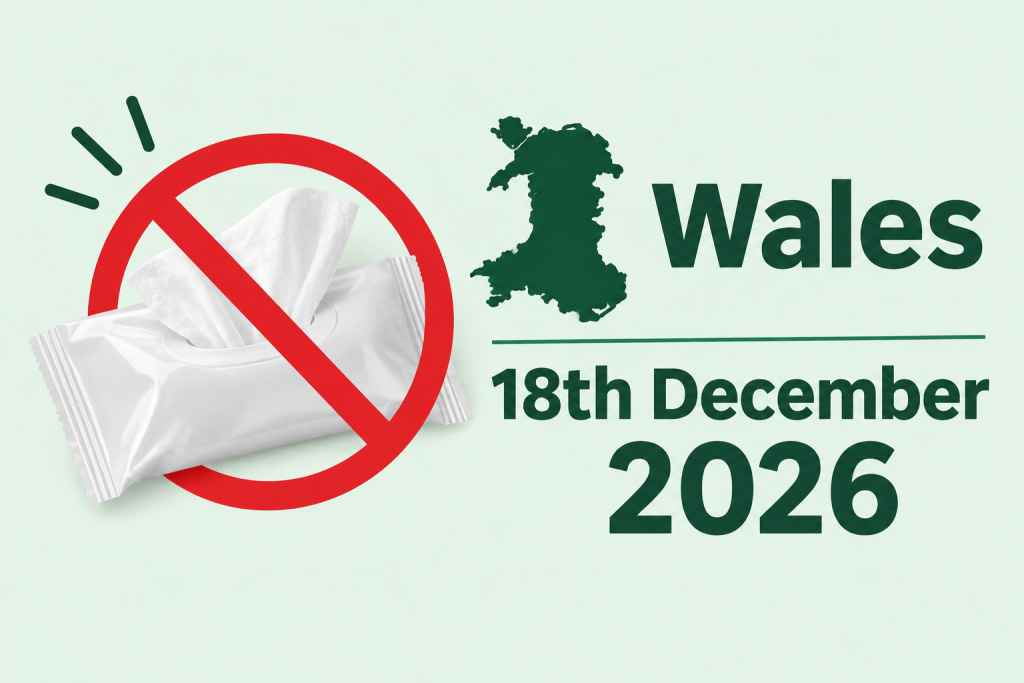
With the first major deadline for the plastic wet wipe ban now just weeks away, manufacturers, retailers and brands need to ensure they are prepared for the changes ahead. From Friday 18th December 2026, new legislation in Wales will prohibit the supply of wet wipes containing plastic to consumers, with similar restrictions coming into force across the rest of the UK during 2027.
Despite the legislation being confirmed, there is still work to do across the industry to ensure products meet the new requirements. So, what does this mean for businesses, and how can you make sure your products are ready?
The Wet Wipe Ban: What Is Changing?
This legislation has been introduced to tackle plastic pollution and reduce the environmental impact of single-use products, particularly those that are incorrectly disposed of. Traditional plastic wet wipes can contribute to sewer blockages and introduce plastic fibres into the environment, where they can persist as microplastics.
Following consultation and the development of new legislation, all four UK nations are now progressing with restrictions on the supply of wet wipes containing plastic. However, the implementation dates differ:
- Wales: 18th December 2026
- Northern Ireland: 18th May 2027
- England: 19th May 2027
- Scotland: 11th August 2027
Wales will therefore be the first to introduce the new restrictions, making the coming weeks particularly important for businesses supplying products to Welsh consumers.
Importantly, the legislation does not mean that all wet wipes are being banned. Instead, it specifically targets single-use wet wipes containing plastic, with plastic-free alternatives remaining available.
Which Wet Wipes Will Be Affected?
The restrictions cover a broad range of everyday products, meaning the changes extend well beyond baby wipes.
Products affected include:
- Baby wipes
- Face and makeup removal wipes
- Cosmetic face sheet masks
- Moist toilet tissue
- Antibacterial hand wipes
- Personal hygiene and deodorant wipes
- Household cleaning wipes, including wet-mop wipes and pads
The rules apply to both online and in-person sales. In Wales, businesses will also need to be aware that supplying plastic-containing wipes to consumers free of charge is covered by the legislation.
There are some important exemptions. For example, wet wipes specifically designed or manufactured for medical care or treatment are excluded. Business-to-business supply is also unaffected by the Welsh restrictions, allowing businesses such as care homes and nursing homes to continue sourcing products containing plastic from suppliers.
However, businesses should not assume that every product falls within an exemption. Understanding the intended use, customer and composition of each product is essential.
The Benefits of Plastic-Free, Biodegradable Wet Wipes
As the plastic wet wipe ban approaches, the demand for plastic-free alternatives is becoming increasingly important. For brands, choosing suitable materials is an essential step towards ensuring products meet the new requirements while continuing to deliver the quality and performance customers expect.
Plastic-free, biodegradable materials such as viscose, lyocell and cotton offer established alternatives to traditional plastic-containing fabrics. These materials can be used to manufacture plastic free wet wipes, helping businesses move towards more sustainable product specifications without compromising on practicality or functionality.
At Guardpack, we already offer compliant plastic free wet wipe solutions, using biodegradable fabrics across our own brand mywipe products and supporting private-label customers with alternative materials to meet their requirements.
While choosing plastic-free, biodegradable materials is an important step towards reducing the environmental impact of wet wipes, responsible disposal remains essential. Even plastic free wipes should not be flushed down the toilet and should be placed in the bin after use.
Why Businesses Should Act Now
Although the Welsh deadline is the most immediate concern, businesses operating across the UK should already be reviewing their product ranges and supply arrangements.
Switching materials is not necessarily an overnight process. Manufacturers may need to review existing specifications, assess alternative substrates, undertake product testing and consider packaging or labelling changes before introducing a new product to market.
For brands and retailers, there are several practical steps worth taking:
- Review existing products: Check the material composition of every wet wipe in your range, including individual sachets and multipacks.
- Speak to your manufacturer: Confirm whether current products contain plastic and discuss suitable alternatives.
- Assess product performance: Ensure replacement materials meet the quality, functionality and customer expectations associated with your products.
- Review packaging and claims: Make sure product descriptions and environmental claims accurately reflect the materials being used.
- Plan your supply chain: Allow sufficient time for development, testing and production so that compliant products are available ahead of the relevant deadlines.
Businesses should also consider existing stock. In Wales, organisations holding plastic-containing wet wipes that cannot legally be supplied after the deadline should seek advice from their supplier, local authority or trade association about appropriate disposal.
Taking these steps early can help prevent unnecessary disruption, protect customer relationships and ensure businesses are not left making rushed decisions as the legislation comes into force.
How Guardpack Is Supporting the Transition
At Guardpack, we have been keeping customers informed about developments surrounding the plastic wet wipe ban for several years. From the initial consultations through to the confirmation of implementation dates, we have consistently highlighted the importance of preparing for the move towards plastic-free alternatives.
As an experienced UK wet wipe manufacturer, we understand that changing product specifications involves more than simply selecting a different material. Businesses need solutions that meet regulatory requirements while maintaining the quality, consistency and performance their customers expect. We actively support private-label customers looking to move towards compliant alternatives. Our team can help businesses explore suitable materials and plan your transition, with product requirements and intended applications remaining central to the process.
The upcoming legislation represents a significant change for the wet wipe industry, but it also presents an opportunity to rethink product materials and make more informed choices about sustainability.
Don’t Leave Your Wet Wipe Transition Until the Last Minute
With the first restrictions taking effect in Wales in just over one month, the time to review your products and supply arrangements is now. Businesses should not wait until the remaining deadlines are approaching to establish whether their products are compliant.
The move towards plastic free wet wipes is already underway, and having the right manufacturing partner can make all the difference when navigating regulatory changes.
At Guardpack, we have the experience, technical knowledge and manufacturing expertise to help your business find the right solution. Whether you are reviewing an existing product range or developing new biodegradable wet wipes, our team is here to help.
Contact Us
Get in touch with Guardpack to discuss your requirements and find out how we can support your transition to plastic free wet wipes:
- Fill out our contact form
- Email us at trade@guardpack.co.uk
- Phone us on 01245 505807
We look forward to hearing from you.